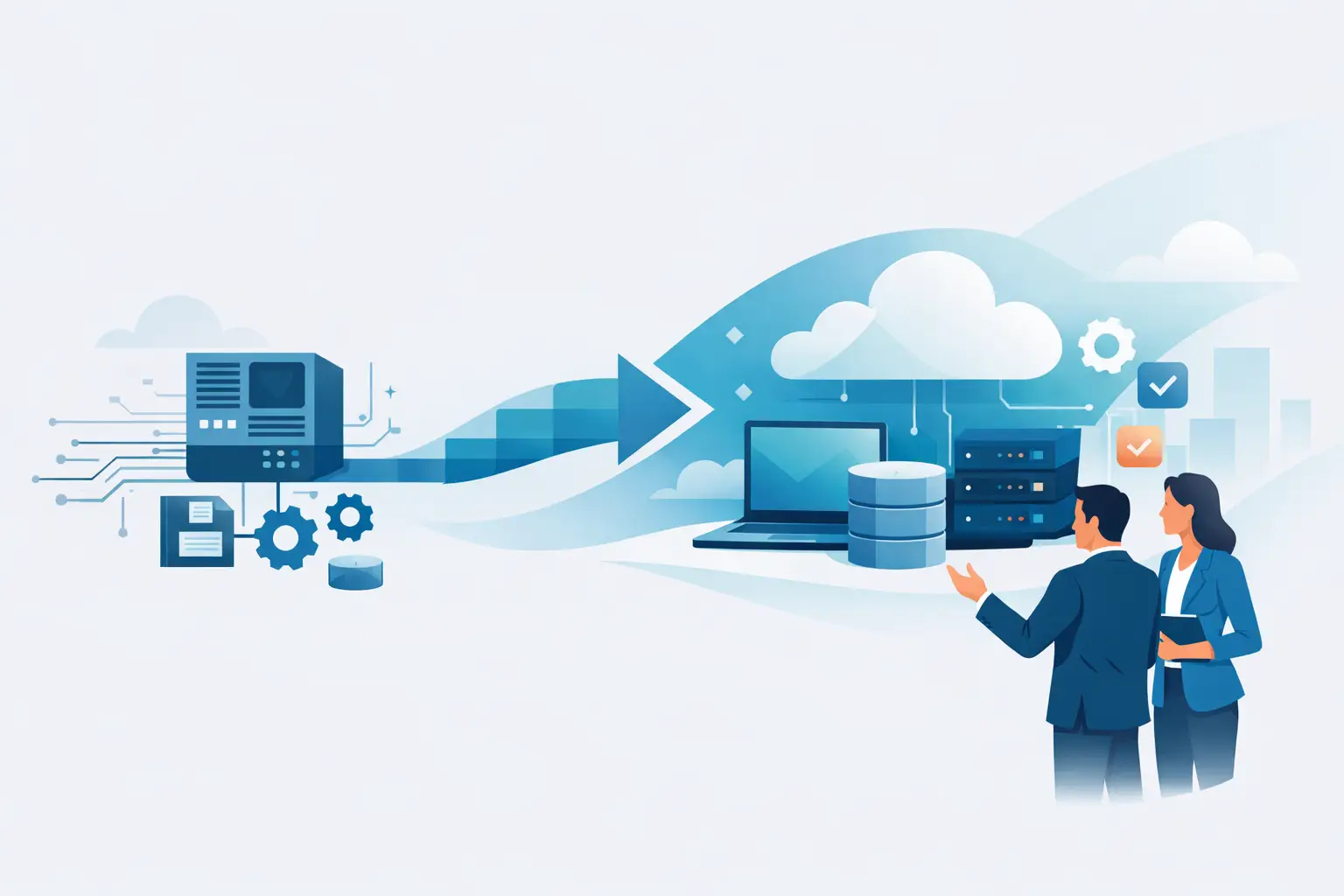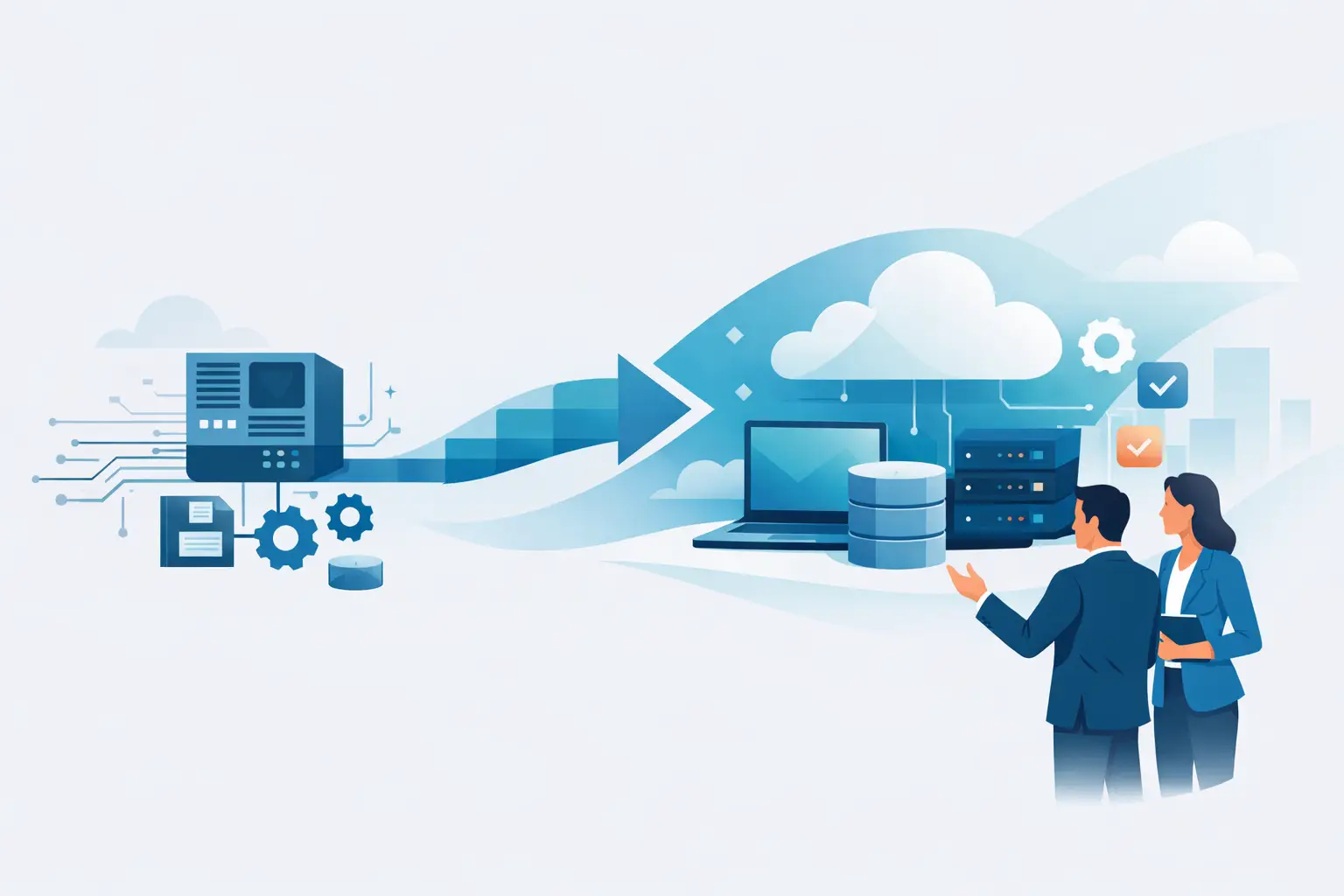
A payroll run that requires one person to restart a server, a warehouse update that appears hours late, or a customer portal that only works in one browser are not minor IT inconveniences. They are operating risks that slow decisions, frustrate teams, and make growth more expensive. Legacy system modernization services help businesses address those risks without forcing a reckless, all-at-once technology replacement.
For enterprise leaders and growing businesses, the goal is rarely to chase a newer tech stack for its own sake. The goal is to create software that supports current operations, gives customers a better experience, and can evolve as the business changes. That requires a modernization plan grounded in business priorities, technical reality, and disciplined delivery.
What legacy system modernization really means
Legacy software is not defined only by age. A ten-year-old application may still be valuable if it is secure, maintainable, and connected to the rest of the business. Conversely, a newer platform can become legacy quickly when it relies on unsupported dependencies, undocumented code, fragile integrations, or manual workarounds that only a few employees understand.
Modernization is the process of improving the system’s architecture, user experience, integrations, data handling, and operational reliability while protecting the business knowledge embedded in it. That knowledge may include pricing rules, approval workflows, clinical processes, inventory logic, or years of customer records. Rebuilding without understanding it can create more disruption than progress.
A successful engagement starts by separating what should be preserved from what should be changed. Some functions can be retired. Others need to be redesigned for mobile access, automation, analytics, or self-service. The strongest outcome is not simply a newer application. It is a system that removes friction from the work that matters most.
When legacy system modernization services become urgent
Most businesses do not decide to modernize because of one technical issue. Pressure builds across operations, customer service, security, and product delivery until the cost of standing still becomes visible.
Common warning signs include:
- Critical workflows depend on spreadsheets, email chains, or manual data re-entry.
- The application cannot integrate reliably with CRM, ERP, payment, analytics, or partner systems.
- Releases take weeks because a small code change creates unexpected failures elsewhere.
- Security patches, hosting upgrades, or compliance requirements are becoming difficult to manage.
- Customers and employees face slow, confusing, or desktop-only experiences.
These signals deserve attention, but they do not automatically mean a full rewrite is the right move. A full rebuild can be justified when the current architecture cannot scale, the codebase is too costly to maintain, or the business model has changed significantly. In other cases, targeted improvements deliver faster value with less risk.
Choose the modernization path based on business impact
Modernization is not a single method. The right approach depends on the system’s condition, the urgency of the problem, available budget, and how much uninterrupted access the business requires.
Rehost when speed matters most
Rehosting moves an existing application to cloud infrastructure with minimal changes to the code. It can reduce data center dependence and improve operational flexibility quickly. However, it does not fix poor user flows, outdated frameworks, or hard-to-maintain logic. It is often a useful first step when infrastructure risk is the immediate concern.
Replatform when the foundation needs improvement
Replatforming makes selected technical changes while keeping the core application behavior intact. A business might move to managed databases, containerized deployment, or a more maintainable hosting environment. This can improve reliability and release management without asking users to relearn the entire system.
Refactor when valuable logic is trapped in poor code
Refactoring improves the internal structure of software while preserving its primary features. It is useful when the system contains valuable business rules but has become difficult to test, extend, or support. The trade-off is that refactoring requires careful discovery and engineering discipline. It can expose hidden dependencies that were never documented.
Rebuild when the experience and architecture both hold growth back
A rebuild creates a new application around current business requirements. It is the right choice when customer expectations have changed, workflows need to be redesigned, or the existing system cannot meet performance, security, and integration needs. The risk is scope expansion. A rebuild should be delivered in controlled phases, not treated as an open-ended wish list.
Replace when a specialized product is a better fit
Sometimes custom software is no longer the best home for a process. A proven third-party platform may handle accounting, HR, support, or commodity functions more efficiently. Even then, replacement is rarely plug-and-play. Data migration, integrations, role permissions, and staff adoption need the same planning attention as a custom build.
Start with discovery, not development
The fastest way to waste a modernization budget is to start coding before the business and technical picture is clear. Discovery should identify the workflows that create the greatest operational value, the points where users lose time, and the technical constraints that could affect delivery.
A practical assessment reviews the existing codebase, infrastructure, data model, integrations, security posture, and deployment process. It also includes conversations with the people who use the software every day. Operations teams often know where the real bottlenecks are, even when those problems never appear in a technical ticket.
The output should be a prioritized roadmap rather than a vague recommendation to “modernize everything.” It should define which capabilities are needed first, what can remain in place temporarily, how systems will exchange data during transition, and how success will be measured. Useful measures might include reduced processing time, fewer support requests, faster release cycles, improved conversion, or lower maintenance effort.
Protect continuity while improving the system
Business continuity is where modernization programs succeed or fail. An application may be technically impressive, but it is not a successful delivery if finance cannot close the month, warehouse teams cannot fulfill orders, or customers lose access to their accounts.
For this reason, phased delivery is often the safer model. A team can modernize a high-impact module, launch it to a defined user group, collect feedback, and then expand. In some cases, old and new components run side by side while data is synchronized through APIs or controlled migration processes. This reduces disruption and gives stakeholders evidence that the new direction works before larger commitments are made.
Data deserves special attention. Legacy databases commonly contain duplicates, missing fields, inconsistent naming, and records that no longer serve a business purpose. Moving every record without validation can carry old problems into the new platform. Data cleanup, migration testing, rollback planning, and reconciliation should be treated as core delivery work, not an afterthought before launch.
Build for ownership after launch
A modernization project should leave the business more capable, not more dependent on emergency support. That means clear documentation, source code ownership, maintainable architecture, monitoring, and a release process that internal teams or an ongoing development partner can operate confidently.
It also means planning for change. Regulations shift, customer behavior evolves, and operational teams find new opportunities once repetitive work is automated. A platform designed with modular services, well-defined APIs, role-based access, and test coverage is easier to extend without destabilizing what already works.
At Xornor Technologies, modernization work is approached as a product and delivery challenge, not just a migration exercise. The focus is on translating business requirements into practical technical decisions, releasing value in manageable stages, and providing continued support for enhancements, maintenance, and change requests.
What to expect from the right modernization partner
The right partner asks difficult questions early. Which workflows generate revenue or protect compliance? Which integrations cannot fail? What happens if a migration step needs to be reversed? Which users need training before rollout? Direct answers create a more accurate scope and reduce late-stage surprises.
Look for a team that can handle architecture, UX, development, QA, deployment, and post-launch support as connected responsibilities. Clear communication matters as much as coding quality, especially when stakeholders span operations, leadership, and technical teams. Regular demos, visible milestones, documented decisions, and transparent risk reporting keep the program moving with confidence.
Modernization does not need to begin with a massive transformation program. Start with the workflow that creates the most friction, risk, or missed opportunity. A focused assessment can turn a system everyone has learned to tolerate into a practical roadmap for faster operations, better customer experiences, and technology that is ready for the next stage of growth. Get in touch to define the first move before outdated software defines your limits.