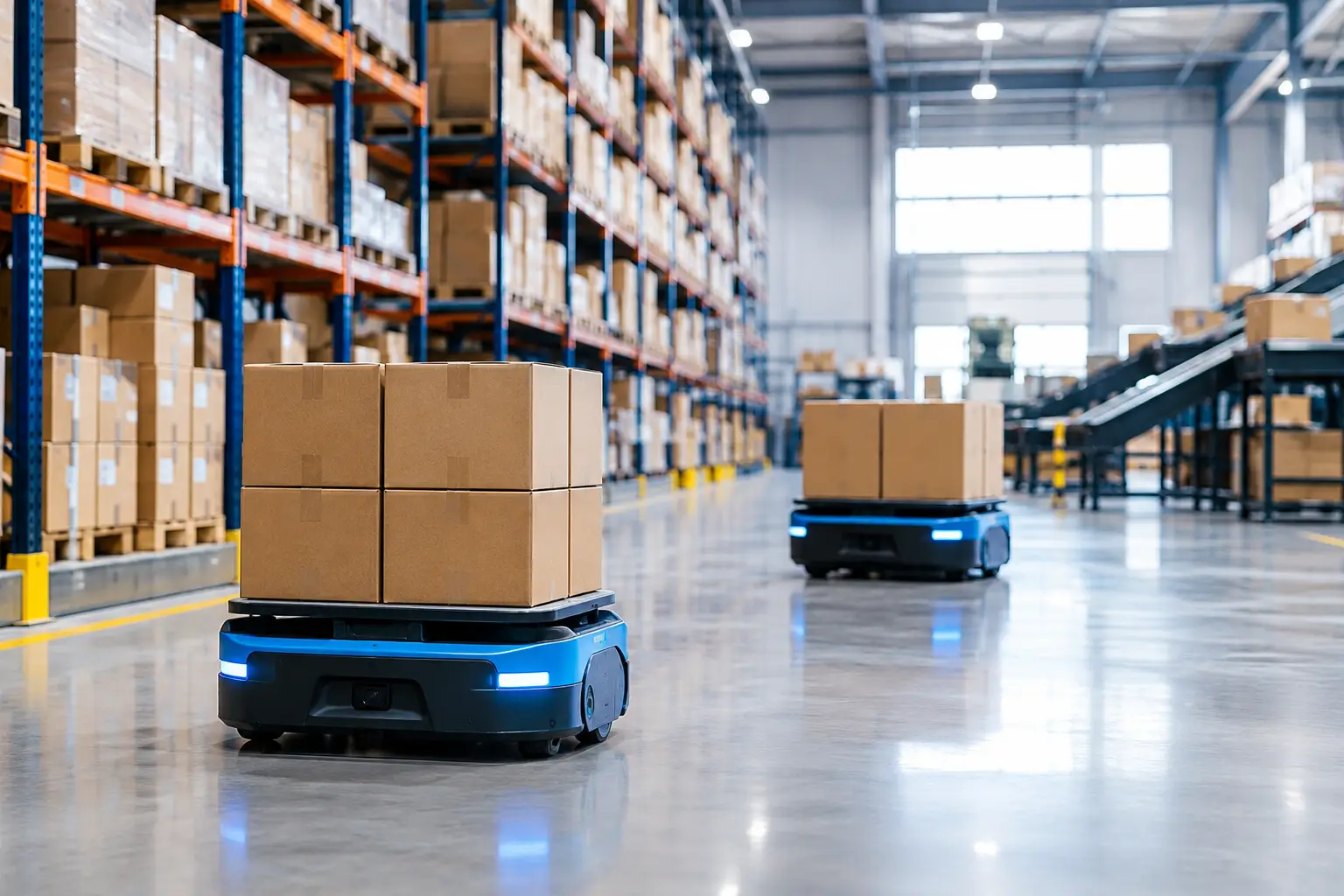
A warehouse can look busy and still be underperforming. Teams may be working hard, orders may be leaving every day, and inventory may appear controlled – until seasonal demand, a new sales channel, or a major customer exposes the gaps. Warehouse automation addresses those gaps by connecting the physical work on the floor with accurate, timely software decisions.
For operations leaders, the objective is not to replace every manual task with a machine. It is to build a fulfillment operation that can process more volume, make fewer errors, and give managers a clear picture of what is happening without relying on spreadsheets, radio calls, or end-of-day reconciliation.
What Warehouse Automation Actually Means
Warehouse automation is the use of software, connected devices, and automated equipment to manage or perform warehouse activities. These activities can include receiving, putaway, inventory tracking, picking, packing, sorting, replenishment, and shipping.
The term covers a wide range of investments. At one end, a company may introduce barcode scanning, mobile workflows, and a warehouse management system that directs employees to the next task. At the other, it may deploy conveyors, automated storage and retrieval systems, robotic picking, and computer vision.
The distinction matters because not every operation needs high-cost physical automation. A growing distributor with inconsistent inventory records may gain more from a custom receiving workflow and real-time stock visibility than from robotics. A high-volume ecommerce business shipping thousands of similar orders per day may have a stronger case for conveyor systems, automated sortation, or goods-to-person technology.
The right decision starts with the operational constraint. Is the warehouse losing money through picking errors? Is labor planning difficult because demand is unpredictable? Are employees spending too much time walking between locations? Is inventory data delayed or unreliable? Technology should solve a defined problem, not simply make the facility look more advanced.
Where Warehouse Automation Creates Business Value
The most immediate benefit is usually accuracy. When workers scan products, bins, pallets, and shipments at each step, the system can validate that the right item is moving to the right place. This reduces mispicks, inventory adjustments, returns, and avoidable customer service work.
Speed is equally important. Automated task assignment can prioritize urgent orders, group picks intelligently, and direct associates through efficient routes. Managers no longer need to manually decide which work should happen next. The software applies business rules consistently, even during the busiest hours.
Warehouse automation also improves visibility across the supply chain. Operations teams can see what has been received, what is available, what is allocated, and what is delayed. Sales and customer support teams gain more reliable delivery information. Finance teams can work from cleaner inventory data. For leadership, this creates a better foundation for forecasting, purchasing, and capacity decisions.
Labor remains central to the equation. Automation can reduce repetitive movement and administrative tasks so experienced employees can focus on exception handling, quality checks, and higher-value work. However, the outcome depends on workflow design. Introducing scanners or robotics without changing inefficient processes can create frustration instead of productivity.
Start With Software Before Adding Complex Hardware
For many businesses, the strongest first step is software-led automation. A warehouse management system, or WMS, becomes the operating layer between inventory, employees, orders, and external business platforms. It can integrate with ecommerce storefronts, enterprise resource planning systems, transportation platforms, supplier portals, and customer applications.
A useful WMS should do more than record stock levels. It should guide work in real time. For example, it can assign receiving tasks when an inbound shipment arrives, recommend putaway locations based on item rules, trigger replenishment before a pick face is empty, and prevent a shipment from closing when a required scan is missing.
Mobile applications are often a practical part of this rollout. Warehouse associates need simple screens that work quickly on handheld devices and reflect real conditions on the floor. Supervisors need dashboards that highlight bottlenecks, delayed orders, exception queues, and labor performance. The design must account for intermittent connectivity, shared devices, user permissions, and fast task completion.
Custom development becomes valuable when off-the-shelf tools cannot match the business model. A company may need special handling logic for regulated products, multi-client fulfillment, serialized inventory, complex kitting, or unique carrier rules. Building an integration layer or tailored workflow can preserve the advantages of existing systems while removing manual workarounds.
Choosing the Right Level of Automation
A phased approach is usually safer than a large, all-at-once deployment. Begin with process mapping. Measure the time from order release to shipment, the error rate by workflow, the distance traveled per pick, inventory variance, and the reasons work stops. These baselines make it possible to judge whether an investment is delivering results.
Next, prioritize processes with high volume, high error risk, or frequent handoffs. Receiving and picking are common candidates because mistakes in these stages affect every downstream activity. Returns processing can also be a high-value target, especially for ecommerce businesses where slow inspection and restocking tie up inventory.
Hardware should follow proven requirements. Barcode and RFID technology improve traceability, but their value depends on labeling standards and disciplined scanning. Autonomous mobile robots can reduce travel time, but they need safe routes, facility readiness, maintenance planning, and integration with the WMS. Automated storage systems improve density and retrieval speed, but they may be difficult to justify when product mix changes frequently or order volume remains uneven.
There is no universal automation roadmap. High-SKU, low-volume operations often need flexible software and well-designed manual workflows. Low-SKU, high-volume fulfillment centers may benefit from more fixed equipment. Businesses with rapid growth may favor modular systems that can expand without a major facility redesign.
Integration Is the Difference Between Data and Decisions
Automation creates value when systems share accurate information. If the WMS, ERP, ecommerce platform, order management system, and shipping tools are disconnected, teams still spend time reconciling data. A shipment may be marked complete in one system but remain open in another. Inventory may be available online even though it has been reserved for a wholesale order.
Integration architecture should define a clear source of truth for inventory, orders, products, and customers. It should also define what happens when data fails to sync. Exception workflows are not a minor technical detail. They are essential to keeping operations moving when an API is delayed, a label cannot be generated, or a product record is incomplete.
Real-time integration is useful for critical events, such as inventory allocation or shipment confirmation. But not every update needs to happen instantly. Batch processing can be appropriate for lower-priority reporting data and can reduce system load. The right design depends on order volume, service-level commitments, and the cost of stale information.
Build Adoption Into the Implementation Plan
A technically sound platform can still fail if warehouse teams do not trust or understand it. Involve supervisors and experienced associates early. They know where exceptions occur, which steps are impractical, and how work changes during peak periods. Their feedback improves the product and makes rollout more credible.
Training should use real scenarios, not generic demonstrations. Employees need to know how to receive a damaged pallet, handle a missing barcode, split an order, correct a short pick, or escalate a carrier issue. Clear fallback procedures matter as much as ideal workflows.
Pilot the solution in a controlled area before expanding across the facility. This gives the team time to test integrations, refine screen flows, validate reporting, and confirm that performance remains stable under real operating conditions. Set measurable targets for adoption, scan compliance, throughput, and errors.
A Better Foundation for Growth
Warehouse automation is not a single purchase. It is an operating capability that evolves as products, demand patterns, facilities, and customer expectations change. The best programs combine disciplined process design with software that can adapt without forcing teams back into manual work.
For businesses planning a custom WMS, mobile warehouse application, integration layer, or AI-driven workflow, Xornor Technologies can help translate operational requirements into production-ready software with clear milestones and long-term support. Start with the bottleneck that is costing the most time or accuracy, then build the technology foundation that lets your warehouse improve with every new stage of growth.